
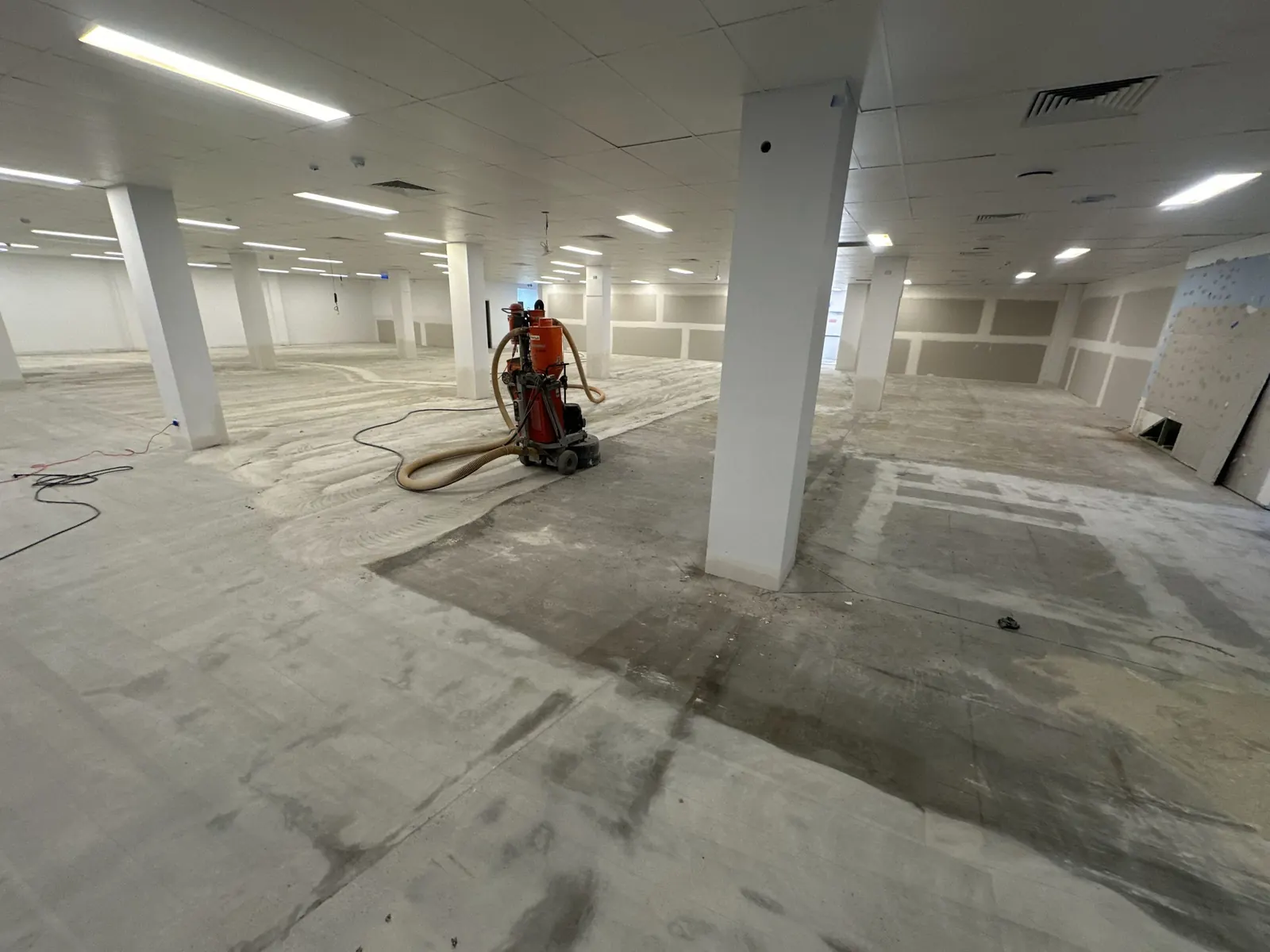
Most floor failures start in the slab, not the board. Moisture is the one I see first, and it is the one you cannot judge by looking.
A dry slab is not always a dry slab
A concrete slab can feel dry on top and still be releasing vapour from below. While the surface is open, that vapour has somewhere to go. The moment a floor seals it in, it has nowhere to go.
What happens next is the list nobody wants on their floor: cupping, drumming, peaking joins and declined warranty claims. Moisture, cracks, contamination and an uneven substrate cause all of them.
None of this shows up on a sample board. A sample sits in your hand, not on your slab.
What testing actually gives you
When I come out for a site inspection, I test moisture before anything else. You get a documented reading, not a hunch. That reading does three jobs:
- It tells us whether the slab is ready for the floor you have chosen.
- It tells us whether a moisture treatment belongs in the scope.
- It gives you a record, so the warranty conversation is short if it ever comes up.
This is why we test and record before we price. A quote written without a moisture reading is a quote written with a hole in it, and you only find the hole after the floor is down.
Solid timber is the least forgiving
Solid hardwood moves more than anything else we lay. Boards are acclimatised and moisture-checked before laying, and the slab or subfloor is checked first. If the floor under the timber is wetter than it should be, the timber will tell you about it later.
Engineered timber has a more stable core, but it still needs a dry substrate to stay that way. Hybrid has a waterproof core, but it still needs a sound, flat substrate underneath it.
Why it comes first in the order of work
Every other step depends on the answer. Grinding, crack treatment and levelling all assume the slab is sound and dry enough to take them. If moisture is a problem, that changes the scope, and it is far better for that to be written down at the start than discovered after take-up.
It is the first of the eight checks in our Floor Ready Guide for exactly this reason. If a quote you are comparing does not mention moisture, ask why.
What to do next
If you are about to buy a timber, engineered or hybrid floor, get the slab tested before you commit to the product. That is the order that protects your money and your warranty.
Book the site inspection and I will come out, test the moisture, check the flatness and tell you straight what your floor needs.